What are the rules of the 2026 FIFA World Cup?
The complete guide to the format, regulations and key rule changes of the biggest World Cup in history.
2026 FIFA World Cup: The Complete Rules and Format Guide
The New 48-Team Format
The 2026 FIFA World Cup marks the most significant structural change in the tournament's history. For the first time ever, 48 nations will compete — up from the 32-team format used since 1998. This expansion, approved by FIFA in 2017, transforms the tournament into a 104-match event spread across 39 days, hosted by three nations: Canada, Mexico, and the United States. The additional 16 teams create new opportunities for smaller footballing nations to qualify and compete on the world's greatest stage. The tournament is divided into two distinct phases: a group stage and an extended knockout round, with the format carefully designed to maintain competitive balance while accommodating the larger field of participants.
Group Stage: 12 Groups of Four
The group stage of the 2026 FIFA World Cup consists of 12 groups, each containing four teams — a total of 48 nations playing 48 matches across the opening phase. Every team plays three group-stage matches, one against each of the other sides in their group. Three points are awarded for a win, one point for a draw, and zero points for a defeat — the standard FIFA points system. The top two teams from each group advance automatically to the round of 32, securing their place in the knockout phase. Additionally, eight third-placed teams — the best eight from all 12 groups based on points and goal difference — also progress, bringing the total number of teams advancing from the group stage to 32. This means that finishing third in a group is no longer an automatic elimination, giving every team a fighting chance deep into their group campaign.
Knockout Stage: Round of 32 to the Final
Once the group stage concludes, the tournament enters a single-elimination knockout format beginning with the round of 32. From this point forward, every match is decisive — there is no second chance. The 32 surviving teams compete across five knockout rounds: round of 32, round of 16, quarter-finals, semi-finals, and the Final. If a knockout match is level after 90 minutes of regulation time, the game proceeds to two periods of extra time, each lasting 15 minutes. If the scores remain tied after extra time, the match is decided by a penalty shootout. The Final will be played on July 19, 2026, at MetLife Stadium in East Rutherford, New Jersey — the same venue that hosted some of the most iconic moments in American sporting history. Third place is contested in a separate play-off match the day before the Final.
Squad Rules: 26 Players Per Nation
Each participating nation is permitted to register a squad of 26 players for the 2026 FIFA World Cup, an increase from the traditional 23-player squads used in previous tournaments. This expanded squad size was first trialled at the delayed 2020 UEFA European Championship and subsequently adopted by FIFA for the 2022 Qatar World Cup. Of the 26 registered players, each squad must include a minimum of three goalkeepers. National associations must submit their final confirmed squads to FIFA by a set deadline prior to the tournament. In the event of a serious injury occurring before a team's first group-stage match, FIFA may, under strict medical certification, permit the replacement of the injured player with another from the nation's preliminary selection. Once the tournament begins, no further substitutions to the squad are permitted under any circumstances.
VAR: Video Assistant Referee Rules
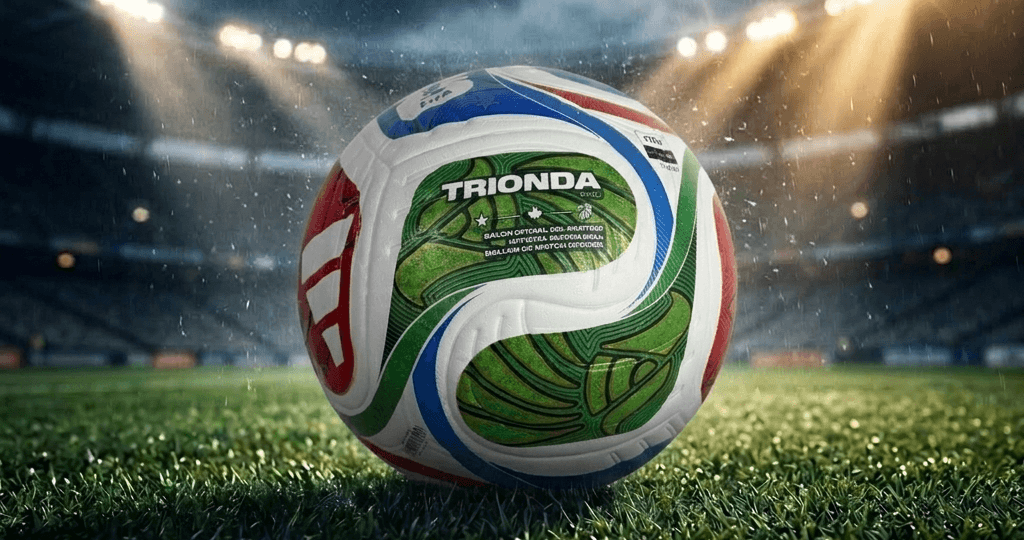
The Video Assistant Referee system, first introduced at the 2018 FIFA World Cup in Russia, returns for 2026 in its most advanced form yet. VAR is used exclusively to review four categories of match-changing incidents: goals and the build-up to goals, penalty decisions, direct red card incidents, and cases of mistaken identity by the on-field referee. For the first time, VAR at the 2026 World Cup is directly integrated with the TRIONDA ball's 500Hz motion sensor, enabling far faster and more precise data-driven decisions, particularly for offside calls and handball incidents. The on-field referee retains ultimate authority at all times — VAR can only recommend a review, and the final decision always rests with the referee. The Referee Review Area (RRA) pitchside monitor system also remains in place, allowing referees to personally review footage before making a final ruling.
Offside Rules and Semi-Automated Technology
The offside law itself remains unchanged for 2026: a player is in an offside position if any part of their body — excluding the hands and arms — is closer to the opponent's goal line than both the ball and the second-to-last defender at the moment the ball is played. What has fundamentally changed is the speed and accuracy with which offside decisions are made. Semi-Automated Offside Technology (SAOT), first used at the 2022 World Cup in Qatar, returns for 2026 with significant upgrades. The system uses a combination of dedicated tracking cameras, player skeletal data points, and real-time ball-position data from the TRIONDA's embedded sensor to produce three-dimensional offside determinations in a matter of seconds. This dramatically reduces the lengthy VAR delays that frustrated players and fans in Qatar, while delivering a higher level of geometric precision than any human linesman could achieve.
Yellow Cards, Red Cards and Suspension Rules
The disciplinary framework for the 2026 FIFA World Cup follows standard FIFA regulations with specific tournament thresholds applied. A player who receives two yellow cards in separate matches during the group stage is automatically suspended for their team's next match. Yellow cards are partially wiped after the quarter-finals: any player who has accumulated yellow cards up to and including the quarter-finals enters the semi-finals with a clean slate, provided they have not received a direct red card. A direct red card results in an automatic minimum one-match ban, with the possibility of further matches added depending on the severity of the offence as assessed by FIFA's Disciplinary Committee. Players receiving a red card through two bookable offences in the same match — a double yellow — serve the same minimum one-match suspension. Serious violent conduct or abusive language can trigger extended bans of two or more matches.
Tiebreakers: How Group Positions Are Decided
When two or more teams finish the group stage level on points, FIFA applies a strict sequence of tiebreaking criteria to determine final standings. The first tiebreaker is goal difference across all group matches. If teams remain level, the next criterion is total goals scored. If still tied, FIFA examines the head-to-head record between the tied teams specifically — first by points in those direct matches, then by head-to-head goal difference, then by head-to-head goals scored. If the deadlock persists after all head-to-head criteria are exhausted, FIFA moves to fair play points: yellow cards count as minus one point, a red card following two yellows counts as minus three points, and a direct red card counts as minus three points. In the extremely unlikely event that teams remain equal after all of the above, the final tiebreaker is a drawing of lots conducted by FIFA — effectively a random selection to determine who advances.
Follow every match of the 2026 FIFA World Cup
Stay updated with teams, venues, players and all the latest news from the biggest World Cup in history.
Explore Sport11.hu